

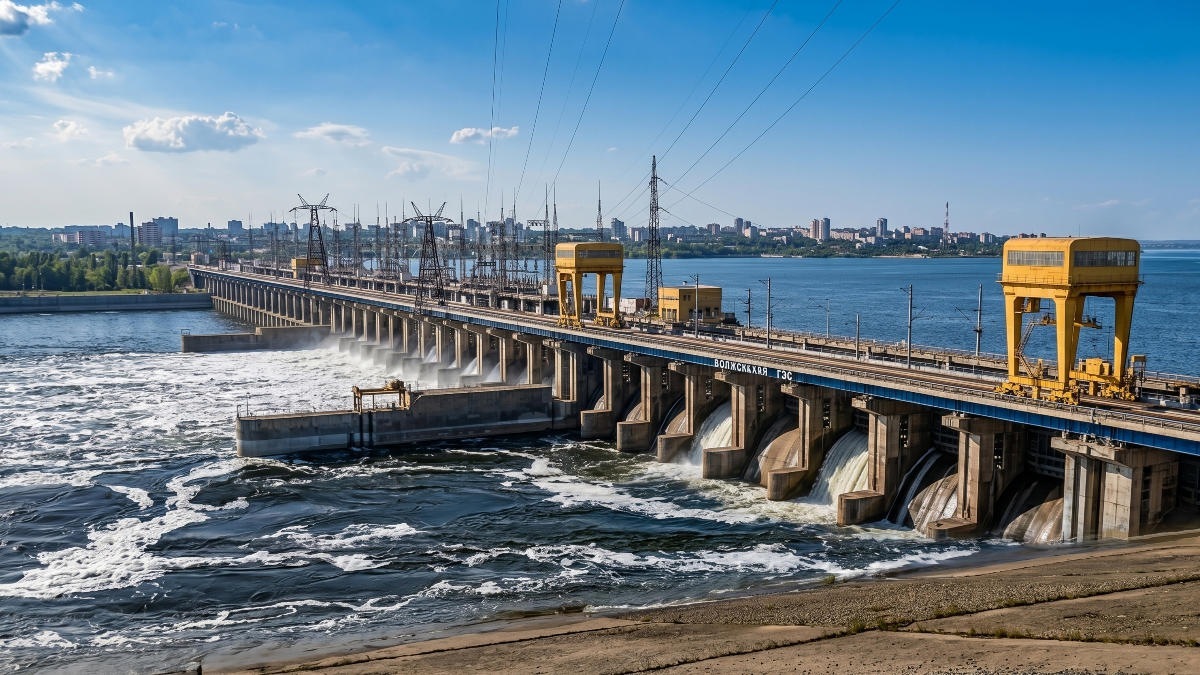
Russia’s federal water resources agency has adjusted the water discharge schedule at the Volzhskaya hydropower plant for May 2026. The agency decided to extend peak discharge volumes at the Volgograd hydro hub, with gradual reductions scheduled to begin on May 16. The plant is expected to reach the flow level required for fish spawning, often referred to as the fish shelf, by May 20 at a rate of 18,000 cubic meters per second. While the duration of this stage remains undecided, scientists have issued negative forecasts for regional fish reproduction.
The current flood season began earlier than usual but coincided with unseasonably low temperatures in April and early May. Water in the lower Volga near Astrakhan reached only 6.3 degrees Celsius by May 7, which is below the 8 degrees Celsius required for the start of spawning. Experts from the Volga-Caspian branch of the Russian Federal Research Institute of Fisheries and Oceanography expect a decline in natural fish reproduction. These researchers had proposed an alternative scenario that would have extended the flood over two months while maintaining discharge levels between 16,000 and 19,000 cubic meters per second.
Data from the national meteorological service indicate that total water inflow to the Volga-Kama cascade reservoirs in May is forecast to be between 45 and 61 cubic kilometers. This volume is below the average of 70.3 cubic kilometers recorded over many years. Water distribution across the cascade is uneven. The Gorkovsky reservoir is expected to receive only one third of its normal inflow, while the Kuybyshev and Cheboksary reservoirs are projected to receive volumes close to standard levels. Vadim Nikanorov, deputy head of the water resources agency, said the department is monitoring the flood and is prepared to adjust operations based on weather changes.
The 2026 water release program in the lower Volga started on April 11. Maximum discharges of 26,000 cubic meters per second continued for one week, followed by a reduction to 24,000 cubic meters per second. Between May 4 and May 15, the rate was fixed at 23,000 cubic meters per second. Although the agency initially planned to reduce volumes earlier, the transition to the spawning flow level will now occur in increments of 1,000 cubic meters per day starting May 16. Successful spawning requires maintaining a flow of 18,000 cubic meters per second for four to six weeks once the water warms.
The flood in the lower Volga is currently reaching its peak. The water level at the Kuybyshev reservoir is 14.35 meters, while the Volgograd reservoir stands at 53.19 meters. The maximum allowed level at the Volzhskaya dam is 15.2 meters. While the rate of rising water in the Astrakhan region has slowed, the filling of floodplain areas continues. Government officials intend to review and potentially adjust reservoir operating modes on a weekly basis.