

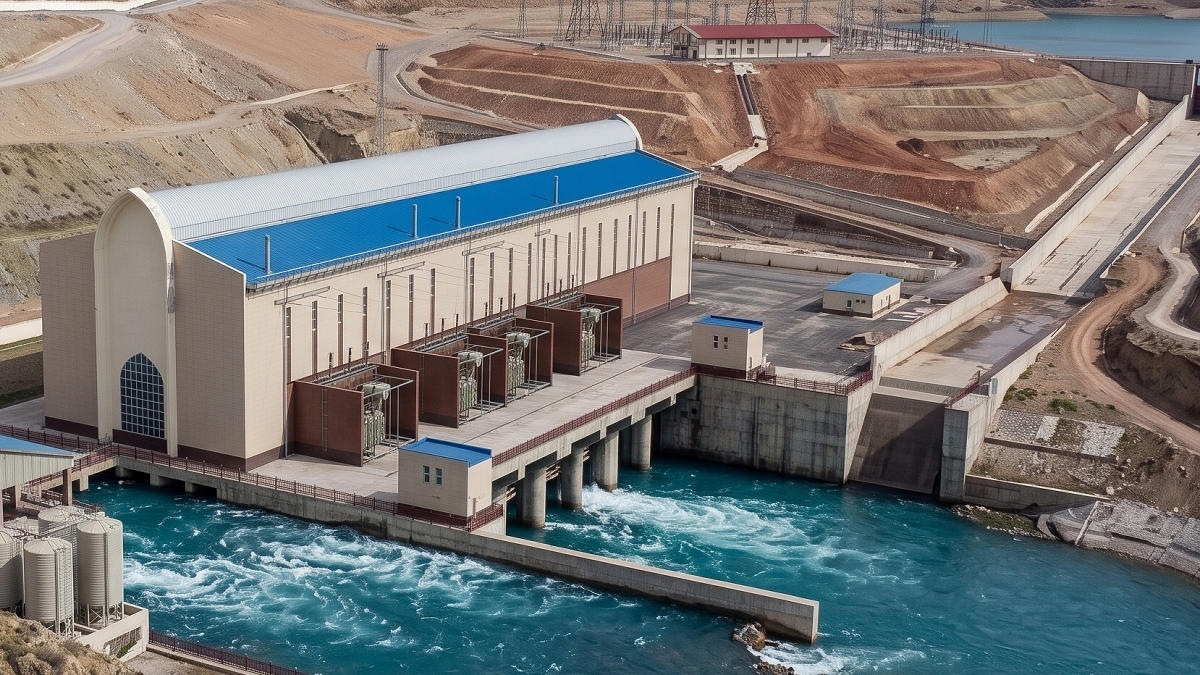
Tajikistan’s Sangtuda-1 hydropower plant generated over 1.4 billion kilowatt-hours of electricity in the first half of 2026, marking a 0.35 percent increase compared to the same period last year, according to company data. The facility, which is Tajikistan’s second-largest hydroelectric station, operated at a capacity utilization factor of 51 percent during the six-month period, up slightly from 50.9 percent a year earlier.
Despite stable operational output, the facility remains entangled in long-standing financial arrears with Tajikistan’s state energy utility, Barki Tochik. Outstanding debt owed to the plant stood at 3.2 billion somoni, or roughly $298 million, at the end of June 2026. While Barki Tochik currently covers ongoing power deliveries in full and on time, the legacy debt continues to affect the joint venture.
The debt issue led to an intergovernmental protocol signed between Russia and Tajikistan in April 2025, amending the original 2009 operating agreement. Under the ratified deal, the parties agreed to a phased write-off of the debt accumulated through late 2024. The agreement schedules annual write-offs of $25 million every February from 2026 to 2033, with a final tranche of approximately $97.9 million due in February 2034, contingent on full current payments and formal land registration.
The restructuring also lowered tariffs to ease financial pressure on Barki Tochik. Power rates were reduced from approximately 3.17 cents per kilowatt-hour to 1.5 cents in 2025, with scheduled increases reaching 2.2 cents by 2032 before fixing at 3.3 cents. Consequently, the projected payback period for the initial $847 million investment, in which Russian entities hold a 75 percent minus one share stake, was extended from 20 to 35 years, pushing estimated cost recovery to 2048.
Beyond balance sheet pressures, Sangtuda-1 faces chronic underutilization. With an installed capacity of 670 megawatts and an annual design output of 2.7 billion kilowatt-hours, the station continuously operates below potential due to internal transmission bottlenecks, regional grid isolation, and limited export options. Summer peak water flows frequently lead to idle water spills, while winter generation remains restricted because domestic power purchasing capacity is constrained.
With official figures showing reported debt unchanged at 3.2 billion somoni by mid-2026, questions remain regarding the execution of the initial write-off tranche scheduled for February 2026. Similar payment difficulties affect other cross-border energy assets in the region, underscoring how network bottlenecks, seasonal hydrology, and domestic tariff policies continue to govern foreign-backed infrastructure investments in Central Asia.