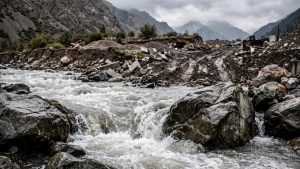
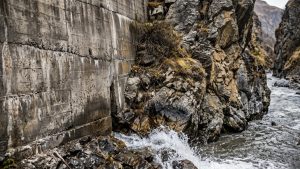
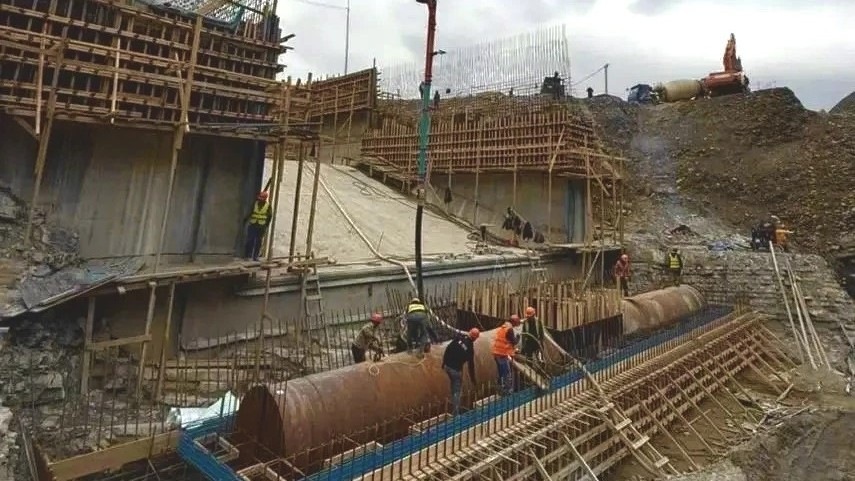
Construction of the Nikhaloyskaya hydroelectric power plant has entered its main stage on the Argun River in Chechnya, where workers have begun building the powerhouse. The project, managed by the Russian power company RusHydro, is part of a state program to support renewable energy. Upon completion, the facility will become the largest electricity generating plant in the republic.
The station will have an installed capacity of 23 megawatts and an estimated annual output of 105 million kilowatt-hours. Engineers from the Gidroproekt Institute designed the facility using a dam-and-diversion scheme to maintain the natural flow of the Argun River and reduce the environmental impact on the mountain waterway. The project includes a 57-meter-high concrete gravity dam, which will be the seventh tallest hydraulic structure in the North Caucasus.
Preparatory work at the site in the Shatoysky district began in July 2024. During this phase, crews built access roads, established a power supply, and completed a three-kilometer diversion tunnel. Current operations involve more than 250 specialists and 46 units of heavy equipment. The powerhouse is designed as a five-story reinforced concrete building, with two floors situated below ground level. Construction will require 8,400 cubic meters of concrete and nearly 400 tons of reinforcement steel.
The facility will house two vertical Francis turbines designed to operate at a water head of approximately 75 meters. All primary equipment is manufactured in Russia, with turbines supplied by the Tyazhmash plant and generators by Elektrotyazhmash-Privod. The reliance on domestic machinery follows recent trends in the Russian energy sector toward industrial self-sufficiency and import substitution.
Commissioning is scheduled for 2028, making Nikhaloyskaya the second RusHydro plant in the Chechen Republic. The construction takes place amid a broader expansion of hydropower in the North Caucasus, where RusHydro operates 38 stations with a combined capacity of 3.4 gigawatts. Hydropower currently provides more than 90 percent of electricity generation in several nearby regions, including Dagestan and North Ossetia, following the completion of 18 new facilities over the past two decades.