Russia’s government has ordered ministries to develop subsidized lending schemes for hydroelectric power plant construction, aiming to attract private investment to a sector currently stalled by high costs and long payback periods.
The instruction, issued to the ministries of economy, energy, and finance, followed a meeting on Siberian energy development led by Security Council Secretary Sergey Shoigu, state news agency TASS reported. Under the directive, the government must create mechanisms to guarantee returns for investors facing construction periods that often exceed a decade.
Large-scale hydropower projects in Russia struggle to attract private capital because of short planning horizons and high upfront costs. Currently, private developers must bear the full cost of land acquisition, resident resettlement, and environmental compensation for reservoir areas (which are legally classified as federal property). To address this, the cabinet plans to simplify land expropriation rules and the process for converting forest land into water bodies.
Conflicting regulations across water management, urban planning, and land use laws have further slowed development, particularly regarding construction in future reservoir zones. To resolve equipment shortages, the Ministry of Industry and Trade has been tasked with aligning domestic manufacturing schedules with plant construction timelines. While foreign partners may be involved, they will be required to localize production in Russia through long-term supply agreements known as offset contracts.
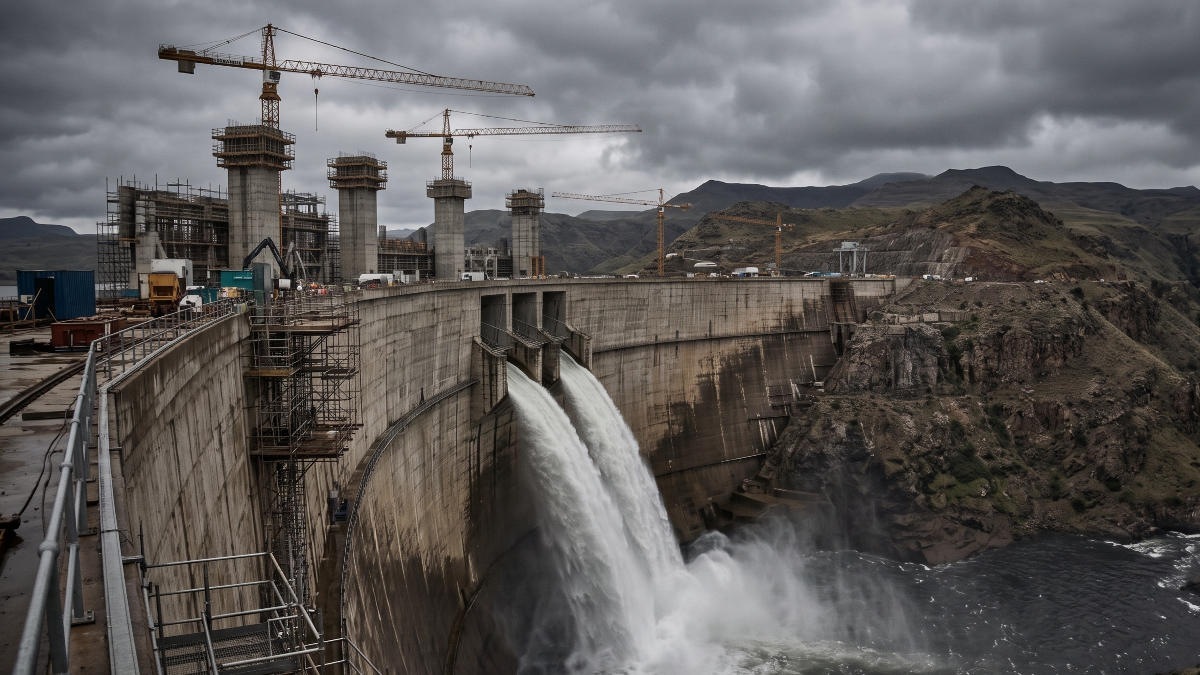
The policy push comes as Russia’s domestic hydropower construction has come to a near-total standstill. No major new hydroelectric plants are currently under construction in the country. The last large-scale project, the Ust-Srednekanskaya plant, was fully commissioned late last year, 34 years after its construction originally began.
Meanwhile, existing plants face significant depreciation. Equipment wear for turbines and generators at operating stations exceeds 40 percent on average and reaches up to 70 percent in some facilities, according to Security Council data, limiting the sector’s ability to plan new engineering developments.