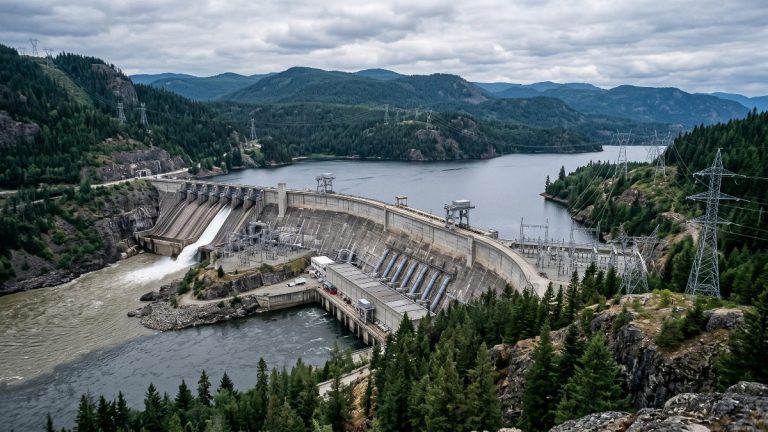



Russian state-controlled hydropower operator RusHydro is in talks with the Vietnamese government to modernize several Soviet-built hydroelectric plants, aiming to help Hanoi stabilize its power grid amid a rapid increase in renewable energy.
The discussions, held between Vietnamese Deputy Prime Minister Pham Gia Tuc and RusHydro Deputy Director General Sergey Machekhin, focus on updating aging infrastructure and introducing new technologies to manage grid volatility. Vietnam has expanded its wind and solar power capacity in recent years, creating a need for reliable baseload generation to balance the national grid. The Vietnamese government has directed its energy ministries to draft a list of specific modernization proposals, which will include replacing obsolete equipment, updating operational standards, and improving safety measures.
For RusHydro, which operates more than 600 power generation facilities with a total capacity of 38.7 gigawatts, the negotiations represent an opportunity to expand its engineering services in Southeast Asia. The company plans to offer infrastructure management technology and industrial energy storage solutions, which are becoming critical for Vietnam as it integrates intermittent renewable energy.
The proposed cooperation builds on decades of technical ties. Soviet and Russian engineers previously designed and built several of Vietnam’s largest hydropower plants, including the 1,920-megawatt Hoa Binh facility, constructed between 1979 and 1994. Other joint projects include the 420-megawatt Tri An plant, as well as the Yali and Son La stations. Because these plants are nearing the end of their operational lifespans and require comprehensive technical audits, RusHydro holds a competitive advantage in securing the contracts because it possesses the original Soviet design blueprints and technical documentation.