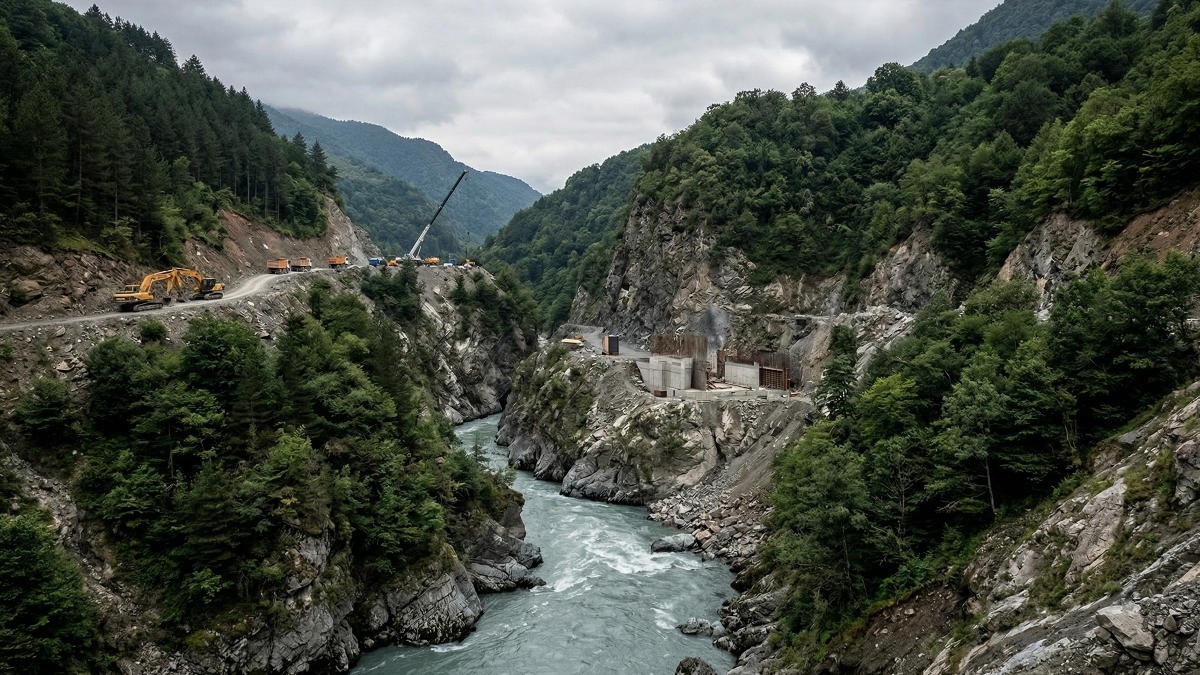
Georgia is shifting its energy policy to balance economic development with environmental protection as it seeks to advance several major hydropower projects. The government is moving away from debating the necessity of large-scale plants and is instead focusing on establishing stricter construction standards and oversight mechanisms.
Mariam Kvrivishvili, a representative of the Ministry of Economy and Sustainable Development, stated that the authorities have increased monitoring across all stages of energy project development. Under the updated regulatory framework, investors must complete comprehensive territorial studies and demonstrate full compliance with environmental regulations before transitioning from the design phase to construction.
These requirements apply to the entire power generation sector, encompassing small, medium, and large hydropower plants (as well as wind and solar facilities). Synchronization with the national power grid is now contingent upon meeting specific construction parameters. The ministry is also placing greater emphasis on environmental impact assessments to meet international standards.
The revised approach aims to reduce social tension surrounding infrastructure projects through enhanced public hearings and shared responsibility between the state and private investors. Projects such as the Namakhvani, Nenskra, and Khudoni hydropower plants have been approved in concept, and the government is now focused on determining the technical methods required to ensure national energy security.