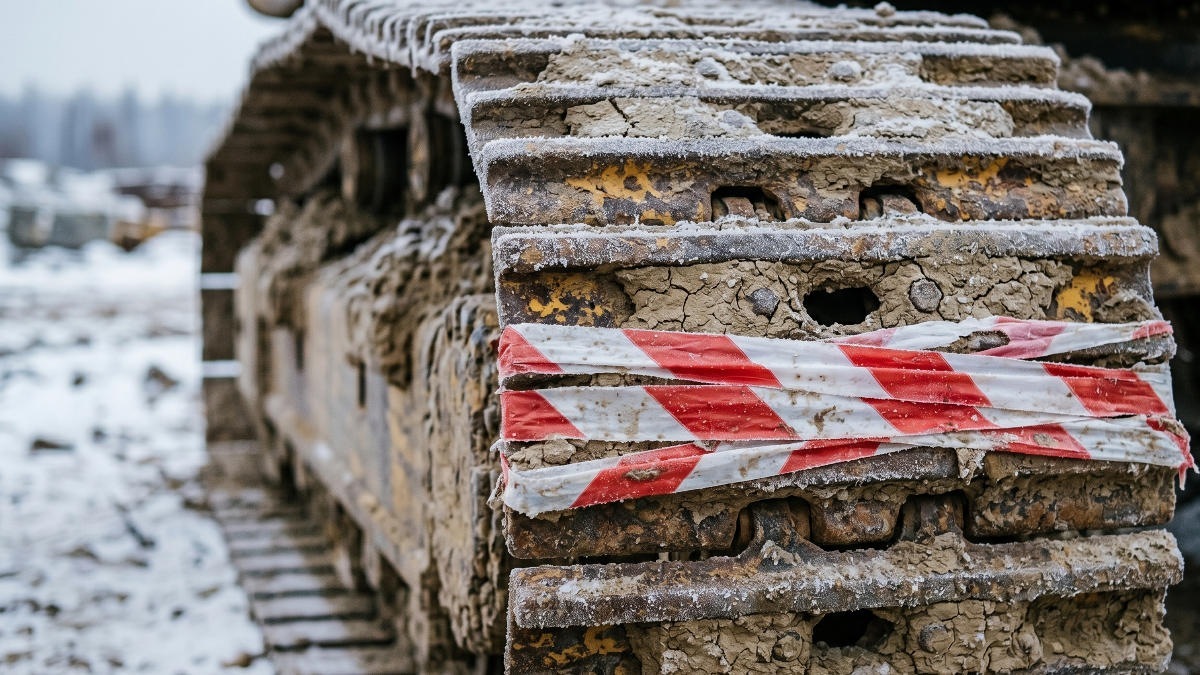
An arbitration court in Russia’s Omsk region has frozen the assets of Mezhregionstroy, the general contractor constructing the strategic Krasnogorsk low-head dam on the Irtysh River, following a petition from regional prosecutors. The court order affects more than 120 units of construction machinery, specialized equipment, and temporary structures at the construction site, amid concerns over the contractor’s deteriorating financial health.
The regional prosecutor’s office initiated the interim measures to secure the potential recovery of more than 1.5 billion roubles in unspent advance payments before filing a formal lawsuit. Mezhregionstroy faces critical financial difficulties, including tax arrears exceeding 900 million roubles and ongoing litigation claiming more than 6.5 billion roubles.
Construction at the Krasnogorsk site has been suspended since mid-February, when the company management declared official downtime. The contractor’s Omsk branch has also stopped wage payments, accumulating 55 million roubles in salary arrears. Local authorities warn that further delays could jeopardize federal subsidies for the project and result in financial penalties for the regional budget.
Under the court ruling, prosecutors must submit a formal lawsuit by the end of June to maintain the asset freeze. If they fail to meet the deadline, the restrictions on the equipment will be lifted automatically. The legal dispute comes shortly after a federal delegation, including government advisor Muslim Khuchiev and deputy head of the Federal Water Resources Agency Natalia Sologub, visited the site to coordinate regional efforts and assess additional support measures to prevent further delays.
The Krasnogorsk dam, located near the village of Krasnaya Gorka, is designed to regulate water levels in the Irtysh River, which have fallen to critical lows. Regional authorities have identified the dam as a priority infrastructure project, stating that the water level decline is driven by extensive upstream water withdrawals in China and Kazakhstan.