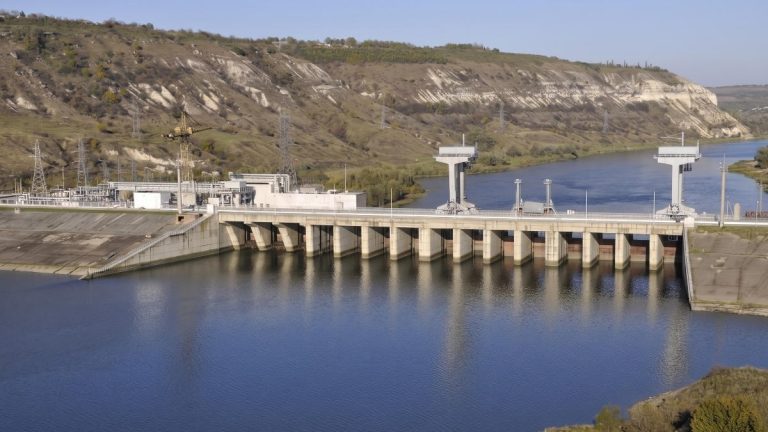




Operators at the Dubossary hydroelectric power plant are preparing for the arrival of an oil slick detected upstream on the Dniester River. Moldovan and Romanian specialists are deploying approximately 100 meters of floating boom barriers to protect the facility’s equipment. The operation is a preventative measure as authorities track the movement of the pollution, following the interception of the bulk of the spill in northern Moldova.
The power station has restricted water discharge to the powerhouse units, keeping the spillway gates closed. This operational scheme allows engineers to maintain tighter control over the river flow. Booms are being positioned directly in front of the intake chambers of the active hydraulic units. These structures are designed to block surface oil films from entering the station’s internal mechanisms. The 100-meter protective line covers the 50-meter length of the powerhouse and extends to the first dam gate.
Alexey Salamatin, chief engineer at the Dubossary plant, said the risk of fuel oil or lubricants entering the turbines is minimal. The water intakes for the units are located at depths between 10–20 meters, while petroleum products typically remain on the surface due to their density. Although the submersion of the oil film to such depths is unlikely, the station is implementing these safeguards to account for all scenarios. Should the remnants of the spill reach the site, the booms will localize the material for subsequent removal and disposal.
The pollution incident was first recorded on March 10 when environmental officials in northern Moldova identified oil spots drifting downstream. Local authorities issued temporary advisories against using river water for drinking or domestic purposes. No shoreline deposits have been reported in the Transnistria region as of yet. Monitoring of the waterway remains in effect as officials wait to see if residual fractions of the spill reach the hydroelectric complex.