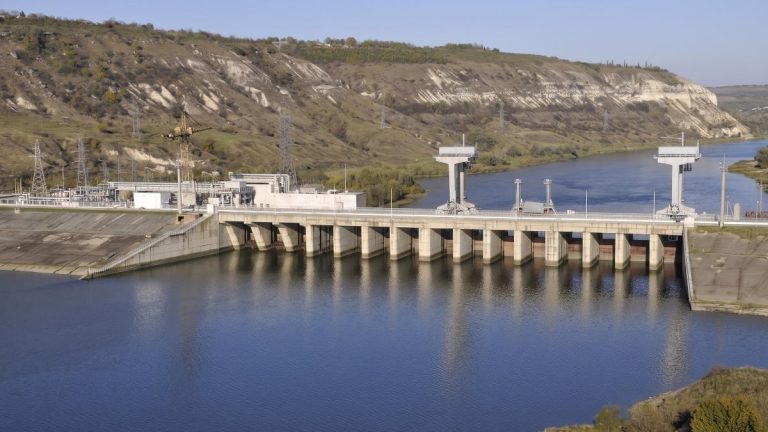


Moldova has declared a 60-day hydrological state of emergency following a sharp drop in water levels along the Dniester River, which threatens hydropower operations and regional water supplies across Moldova and neighbouring Ukraine.
The water level at the Dniester Reservoir in southwestern Ukraine, which powers the Dniester Hydroelectric Power Plant, has fallen from its standard operational benchmark of 121.5 metres to below 111 metres. Operating below 112 metres poses technical risks for the plant’s generating equipment, while municipal networks in adjacent Ukrainian districts are already experiencing supply disruptions.
Moldovan Environment Minister Gheorghe Hajder said the operator of the Dniester hydropower complex has altered its operating procedures, halting water storage. All water flowing into the basin from the Carpathian Mountains is currently being discharged downstream into Moldovan territory.
The drop in water volume is most pronounced on the upper stretch of the river leading to the Dubasari Reservoir. The Dubasari Hydroelectric Power Plant is currently acting as a hydrological buffer, drawing on stored reserves to maintain flow in the lower basin. Environmental specialists note that shrinking discharge volumes and exposed riverbeds will impact aquatic habitats, while local water utilities must adjust pumping and filtration stations to function at lower flow rates.
In response to the deficit, the Moldovan government has imposed mandatory conservation measures. Authorities have banned the use of potable and open-source water for street cleaning, filling swimming pools, and other non-essential activities. Industrial consumers, with exceptions for food processing and healthcare facilities, must cut their water consumption by at least 20 percent.