
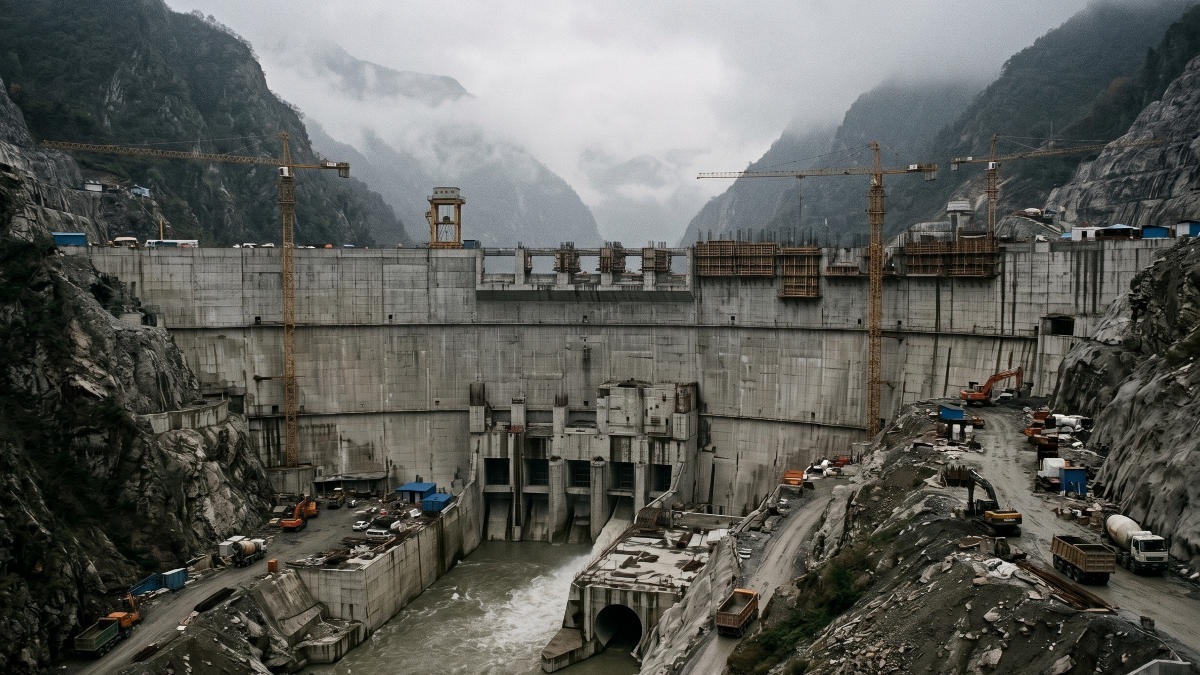
The Georgian government is seeking new investment to restart three major hydropower projects with a combined estimated cost of $2.8 billion, according to Prime Minister Irakli Kobakhidze. The initiative follows years of legal disputes and financial setbacks that have stalled the development of the Namakhvani, Nenskra, and Khudoni plants.
Kobakhidze told reporters that the cabinet has made progress in securing funding but declined to identify potential partners or specify the split between state and private capital. He stated that details regarding the financial structures would be released to the public once the project plans and funding sources are finalized.
The Namakhvani project, designed for a 433-megawatt capacity at a cost of $800 million, remains one of the most contentious developments. Earlier this year, the ministry of economy expressed intent to resume construction, though the project is burdened by a recent international arbitration ruling. The Georgian government was ordered to pay approximately $400 million in compensation to a former investor following a contract termination.
Authorities have taken a different approach with the 702-megawatt Khudoni plant, which requires an estimated $1 billion in investment. The state recently purchased the construction and operation license from Trans-Electrica for $13.5 million. The government must now secure the full financing independently or attract new partners for the project from the beginning.
The Nenskra plant, a 280-megawatt project valued at $1 billion, has been delayed for nearly a decade. Despite an agreement signed nine years ago with South Korean state corporation K-water, the project failed to secure necessary credit lines from international financial institutions. Ongoing legal disputes with the lead engineering contractor have further complicated the development, which was intended to generate over 1 billion kilowatt-hours of electricity annually.
Georgia faces the challenge of convincing international creditors of the commercial viability of these assets. To move forward, the government must navigate previous arbitration outcomes and meet strict profitability requirements for large-scale energy infrastructure.